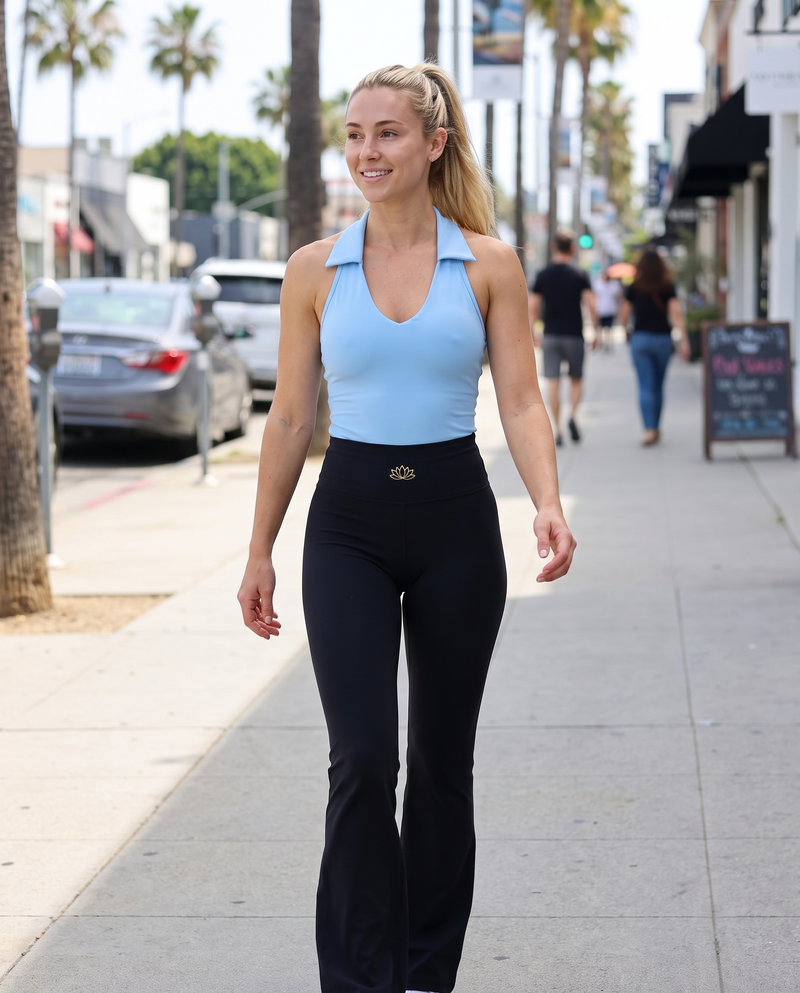
Almost everyone has had the experience: a legging that looks completely opaque on the hanger, and isn't, the moment you get to the bottom of a squat. The common assumption is that darker colours are safer. They aren't, particularly — they just hide the problem slightly better under some lighting.
What actually happens under stretch
A knit fabric is a grid of loops. When you stretch it, those loops open and the gaps between the yarns get bigger. Light passes through the gaps. Whether the garment stays opaque depends on how much fabric there is to begin with, and how the yarn behaves when it is pulled.
The three things that decide it
Density. Measured in grams per square metre. Below roughly 220 gsm, most performance knits will start showing light at full stretch. Denser fabric costs more and is heavier to ship, which is why so many brands sit just under the line.
Yarn thickness. A finer yarn knitted tightly can outperform a thicker yarn knitted loosely. It is the combination that matters, not either number alone.
Recovery. A fabric that stretches and stays stretched will be opaque on day one and translucent at the knee by month three. Recovery is the property that quietly determines whether the garment is still good a year in.
How to test it properly
Don't hold it up to a window. Put it on, and have someone look at you at the bottom of a full squat under overhead light — that is the worst case, and it is the one that matters. If it passes there, it will pass everywhere.
Where we landed
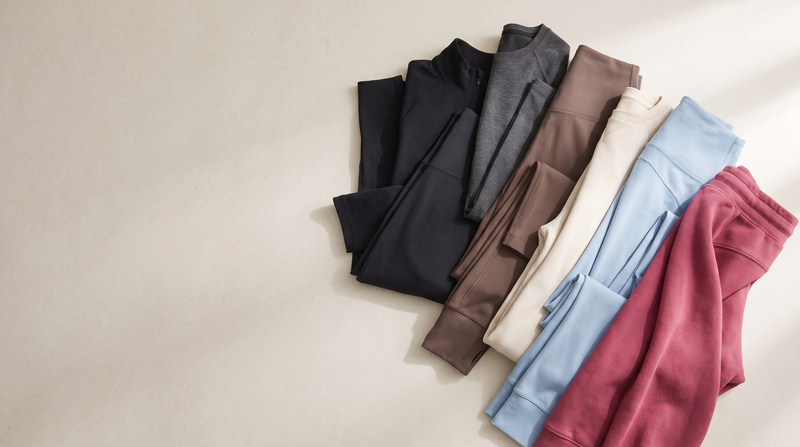
Our leggings use a dense matte knit with high recovery, tested through full range of motion in every colourway before it ships — including the light ones. It is the single most expensive decision in the garment and the one nobody sees on a product page.
If a piece doesn't pass, it doesn't go out. That is a shorter line and a slower launch, and we think it is the right trade.